Physiological Limits and Adaptive Responses
Understanding evolved mechanisms that constrain fat oxidation and influence long-term change.
Understanding evolved mechanisms that constrain fat oxidation and influence long-term change.
The human body has inherent physiological limits to how rapidly fat tissue can be mobilised and oxidised for energy. These limits exist to protect essential functions, maintain lean tissue, and preserve survival mechanisms.
Research suggests that fat oxidation rates plateau around 1–1.2 kg per week for most individuals, regardless of the magnitude of energy deficit. This ceiling reflects the body's capacity to process stored fat, not willpower or effort.
Larger energy deficits do not proportionally increase fat loss rates. Beyond a threshold, greater deficits do not accelerate fat loss—the body has inherent limits to fat mobilisation capacity.
As sustained energy deficit continues, the body initiates adaptive responses that reduce total daily energy expenditure. This is not "metabolic damage" or permanent injury—it is an evolved physiological response to conserve energy and protect survival.
Hormonal Adjustments: Thyroid hormone levels (T3, T4) decrease during sustained deficit, reducing metabolic rate. Leptin decreases, affecting hunger and satiety signals. Orexigenic (hunger-promoting) hormones increase.
Metabolic Rate Reduction: Resting metabolic rate decreases, not merely from lean tissue loss, but from reduced cellular metabolic activity. This adaptation can reduce daily expenditure by 5–15% or more during prolonged deficit.
Activity Compensation: Spontaneous physical activity sometimes decreases during prolonged deficit as the body reduces energy expenditure through non-exercise activity thermogenesis (NEAT).
Intake Compensation: Biological drive to eat increases during deficit. While conscious intake management can override this, the biological pressure toward intake increases with deficit duration.
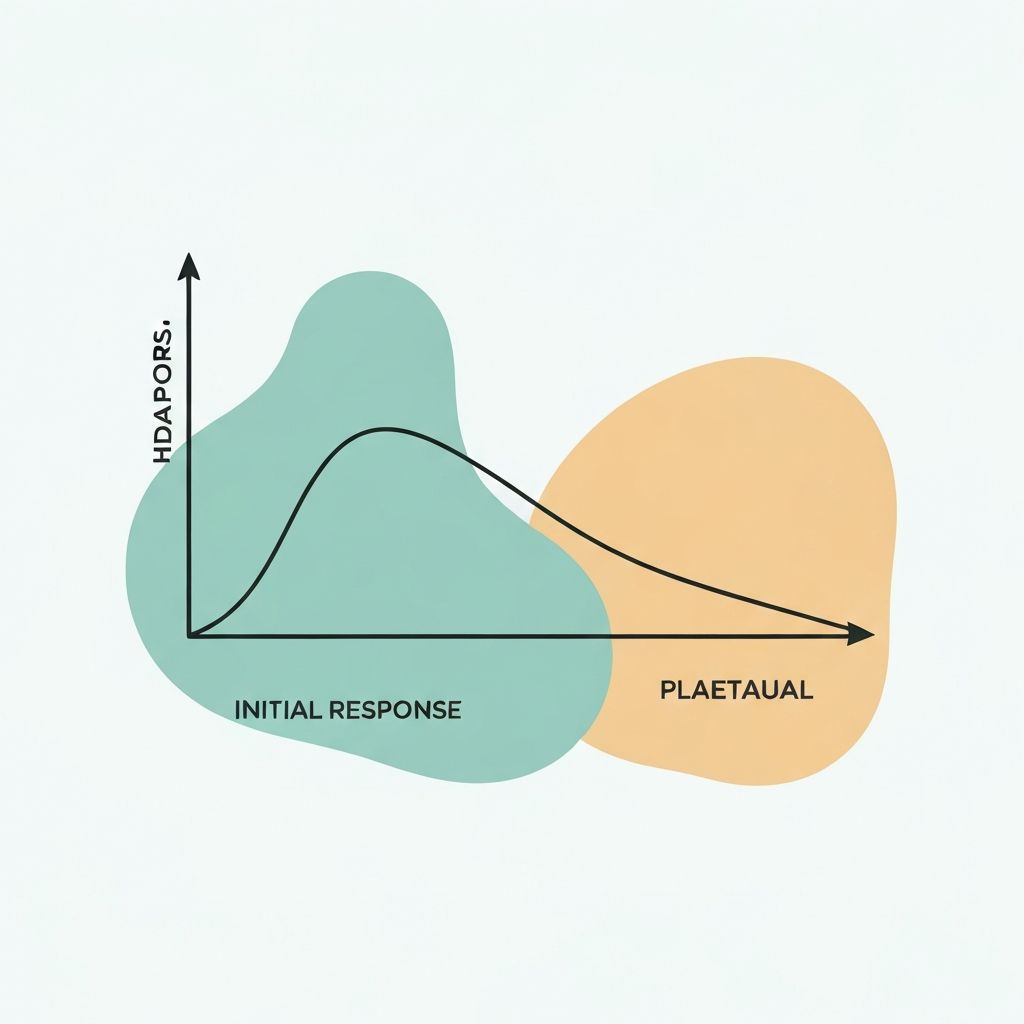
Metabolic adaptation does not occur uniformly. Initial weeks of deficit produce greater weight loss as readily-mobilised water and glycogen deplete. As these stores normalise, the rate typically slows. Continuing deficit triggers progressive metabolic adaptation.
The degree and timeline of adaptation varies among individuals based on genetics, age, sex, and metabolic history. Some individuals show rapid adaptation; others show slower responses.
A weight loss plateau occurs when the body reaches a new equilibrium where current intake and expenditure (including adapted expenditure) balance. This is not permanent stagnation but a shift to a new set point.
Further progress requires either reducing intake further or increasing activity (which itself becomes increasingly difficult due to adaptation and increased hunger).
Plateaus reflect normal physiological adaptation, not failure or a need for extreme measures. They indicate the body has adapted to the current deficit—progress now requires adjustment.
The degree and speed of metabolic adaptation varies substantially among individuals. Factors influencing variation include:
Genetics: Twin studies confirm heritable differences in adaptive response magnitude.
Age: Older individuals may show different adaptive patterns than younger individuals.
Sex: Sex-based differences exist, though overlap is substantial.
Metabolic History: Individuals with prior history of extreme dieting or weight cycling may show more pronounced adaptation.
Deficit Magnitude: Larger deficits typically trigger greater adaptive responses.
Popular claims of "broken metabolism" or permanent metabolic damage are not supported by evidence. Metabolic adaptation is reversible. When energy intake increases, metabolic rate increases. When deficit ends, the body returns toward pre-deficit patterns (though return may be gradual).
Understanding adaptation as a normal, reversible response—rather than damage—provides more accurate context and reduces psychological distress associated with plateaus.
Physiological limits and adaptation suggest:
This article provides educational information about physiological mechanisms of adaptation and limits. It does not constitute medical advice or recommendations for specific approaches. Individual circumstances vary considerably. Please consult qualified professionals for personal guidance.
Discover more about the complex factors influencing body weight change.
Back to Articles